Big Binary Trainings
Enroll Now
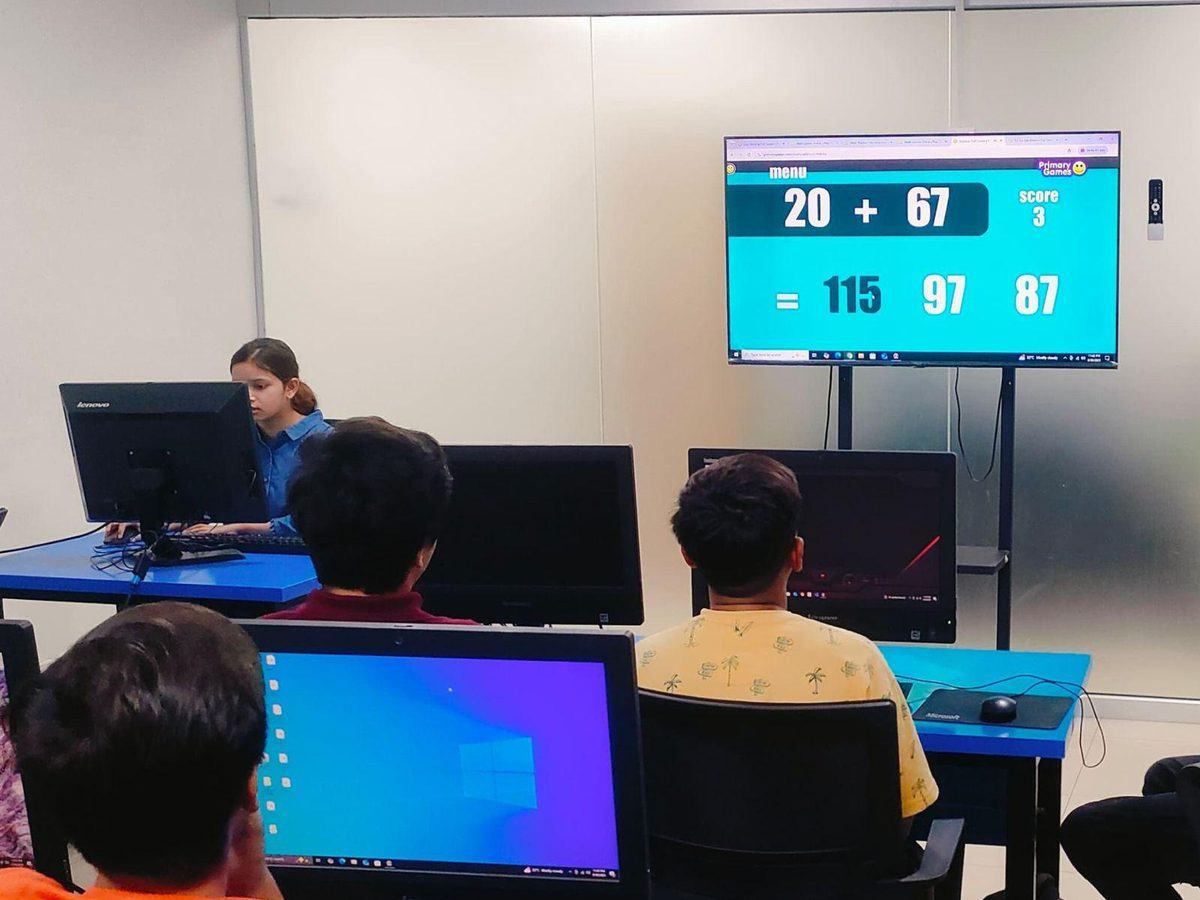
BBT Kids students playing a speed addition game on the class screen
Quick sums
A mental maths game on the class screen while students work at their computers
Maths game
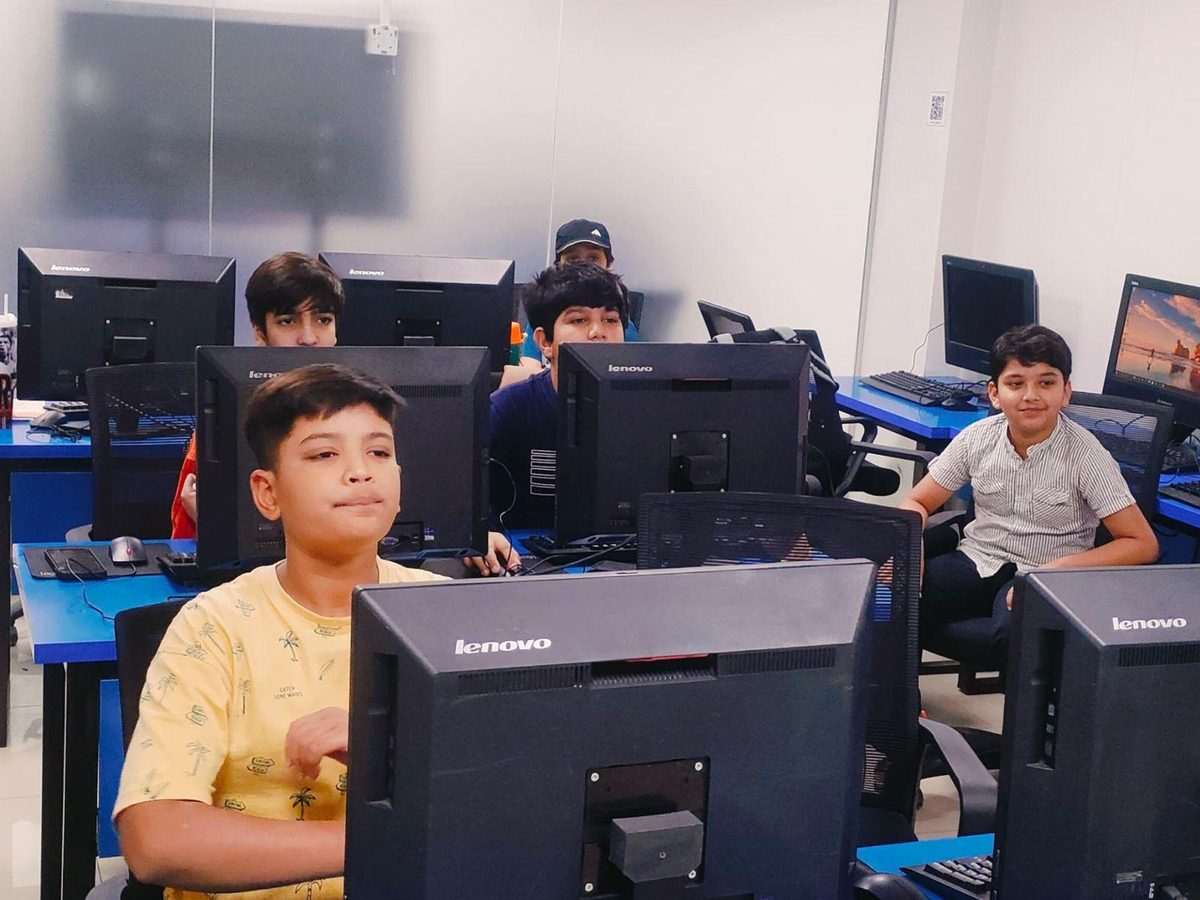
BBT Kids students concentrating at their computers
Lab focus
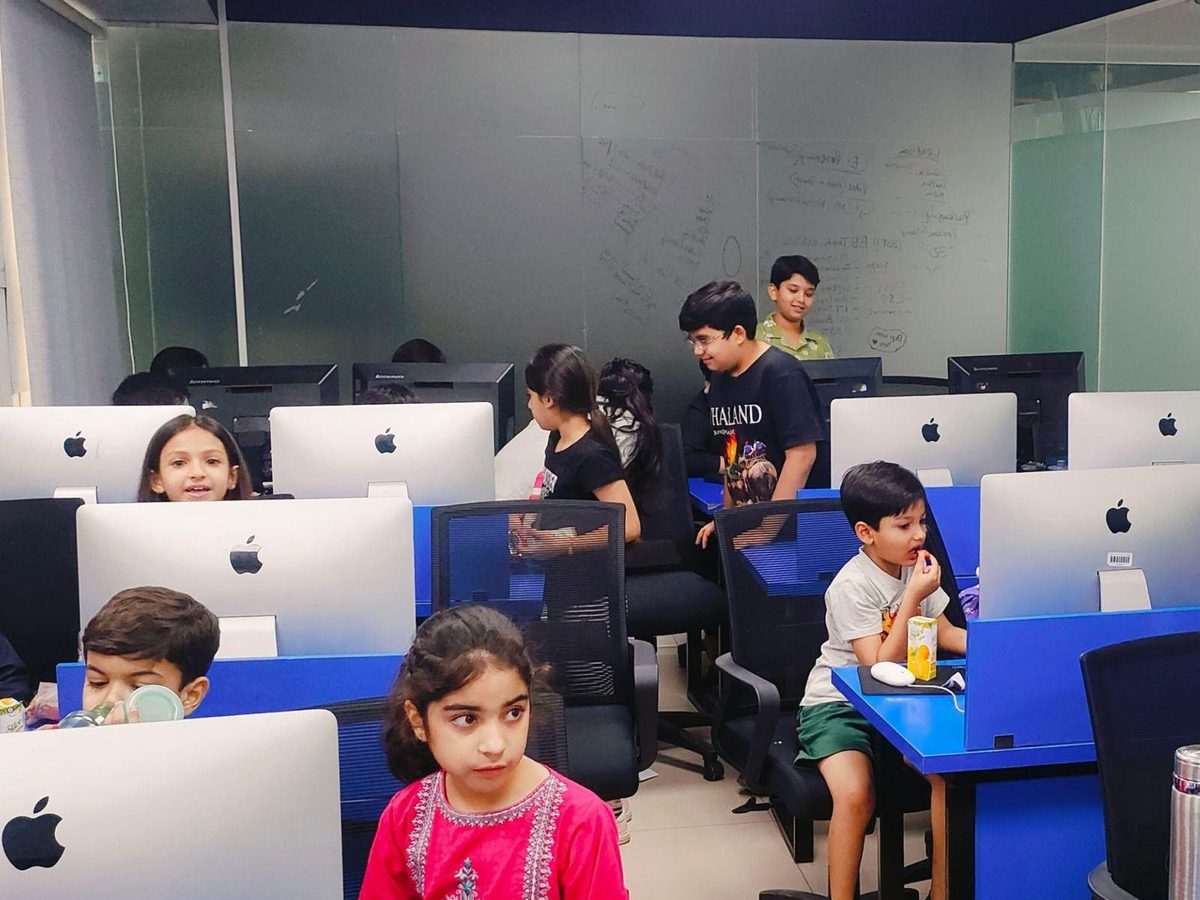
BBT Kids students on a short break in the lab
Snack break

Big Maths

Mental math the Korean and Japanese way.

Visualisation, patterns and mental shortcuts help children add, subtract, multiply and divide in their heads, quickly and accurately, with no calculator. This course is specifically built on the Japanese Soroban abacus and Korean mental math methods.

16 ClassesAge 5+Certificate
What you will learn

What Your Child Learns in Big Maths

Faster in the head than most people are on a phone. Mental math builds logical thinking, concentration and problem-solving, and these Korean and Japanese methods train all three at once.

What they learn
  • Abacus Foundations: The Japanese Soroban and Korean styles: what the beads mean, and how to picture them without the frame in front of you.
  • Visualisation Techniques: How to hold and move numbers on a mental abacus, with exercises built around mental imagery.
  • Addition and Subtraction, Both Styles: Soroban rules and Korean mental shortcuts side by side, so kids find the method that suits them.
  • Multiplication and Division: From 1-digit by 1-digit up to multi-digit work, plus Korean pattern-based methods and handling remainders in your head.
Going further
  • Mixed Operations: Combine addition, subtraction and multiplication, and get the order of operations right at speed.
  • Fractions and Decimals: Mental fraction operations, converting fractions to decimals, and quick estimation tips.
  • Memory and Focus Training: Korean memorisation drills and Japanese focus-building games, the part that carries over into every other subject.
  • Real-Life Problem Solving: Word problems about shopping, distances and money, solved without a calculator.
Course outline

Big Maths Course Outline: 8 Weeks, 16 Classes

Two one hour classes a week, each one building on the last, ending in a timed assessment against the clock and against classmates.

W1Lecture 1 & 2

Introduction to Mental Math · Visualization Techniques

  • Importance of mental calculation
  • Overview of Korean and Japanese styles
  • Introduction to the abacus (Soroban)
  • How to visualise numbers on an abacus
  • Exercises for mental imagery
  • Simple addition practice
W2Lecture 3 & 4

Addition Methods: Japanese Style · Korean Style

  • Soroban-based addition rules
  • Step-by-step practice
  • Speed drills for 1-digit and 2-digit sums
  • Korean techniques for mental shortcuts
  • Compare differences with the Japanese style
  • Group practice challenges
W3Lecture 5 & 6

Subtraction Techniques: Japanese Style · Korean Style

  • Soroban subtraction strategies
  • Visualising borrowing and carrying
  • Practice with increasing difficulty
  • Korean mental subtraction methods
  • Patterns for quick solutions
  • Daily practice drills
W4Lecture 7 & 8

Multiplication Basics · Multiplication Techniques

  • Introduction to mental multiplication
  • Using visualisation for 1-digit × 1-digit
  • Transition to multi-digit multiplication
  • Japanese method for multiplying large numbers
  • Korean pattern-based multiplication
  • Practice worksheets
W5Lecture 9 & 10

Division Basics · Advanced Division

  • Mental division explained
  • Soroban-style division
  • Step-by-step practice
  • Korean techniques for quick division
  • Handling remainders mentally
  • Timed practice challenges
W6Lecture 11 & 12

Mixed Operations · Fractions & Decimals

  • Combining addition, subtraction and multiplication
  • Order of operations in mental math
  • Speed challenge activities
  • Introduction to mental fraction operations
  • Converting fractions to decimals
  • Quick tips for estimation
W7Lecture 13 & 14

Problem Solving with Mental Math · Memory & Focus Training

  • Word problems solved using mental math
  • Real-life applications: shopping, distances, money
  • Group problem-solving activities
  • Exercises for concentration
  • Korean memorisation drills
  • Japanese focus-building games
W8Lecture 15 & 16

Final Speed Drills · Final Assessment & Certificates

  • Time-based addition, subtraction, multiplication and division challenges
  • Competing individually and in teams
  • Review of all techniques
  • Students solve a set of problems under timed conditions
  • Feedback and reflection session
  • Certificates awarded
Is this right for your child?

Who this is for.

01

Children aged 5 and up

The methods rely on visualisation rather than arithmetic drilling. Knowing basic addition and subtraction helps.

02

Students who freeze in maths tests

Speed and confidence tend to arrive together. Timed drills are a weekly fixture here.

03

Kids who reach for a calculator

The whole point is to make the calculator the slower option.

04

Competitive learners

Weeks 5, 6 and 8 include timed challenges, individually and in teams.

05

Anyone who struggles to concentrate

Memory and focus training is a module in its own right, not a side effect.

06

Parents wanting an academic edge

Mental math carries into school maths, physics and everyday problem solving.

See it in actionSee Big Maths in Action. Class games, speed drills and student work, posted as it happens on @bbtkids_.@bbtkids_
Big Maths FAQs

Your questions, answered straight.

What is Big Maths?
Big Maths is a two month mental maths course for kids in Lahore. It uses Korean and Japanese methods, including the Soroban abacus, to teach children to calculate accurately in their heads.
How is Korean and Japanese mental math different from what kids learn in school?
School math often relies on memorizing formulas on paper. Big Maths pairs Japanese Soroban abacus visualization with Korean speed techniques. It turns numbers into visual patterns, letting kids solve multi-digit arithmetic in their heads with incredible speed.
What age is it for?
Children aged 5 to 15.
Will this course help my child do better in their regular school exams?
Definitely. As their mental visualization and speed improve, you’ll notice a big jump in their confidence during school math tests. They finish calculations faster, make fewer errors, and stop dreading word problems.
How long is the course?
Two months: 16 classes, 2 per week, 1 hour each.
Are kids allowed to use calculators in class?
No calculators allowed. The entire goal of this two month program is to help children trust their own minds. By practicing with visual abacus patterns, they build a strong mental calculator of their own.
Can a child who already struggles with math join this class?
Yes. In fact, those are often the kids who benefit the most! We remove textbook stress and make math tactile and visual. Once math feels like a puzzle or a game rather than a test, nervous students quickly build confidence.
Does my child need an abacus?
No. The abacus is introduced in week 1 as a visual foundation. The goal is to work without one, so students learn to picture it instead.
Is Big Maths suitable for children who have trouble sitting still or staying focused?
Yes. Because abacus training involves hands-on bead movement and fast visual exercises, it is fantastic for active learners. It naturally builds longer attention spans, visual memory, and focus in a way that static worksheets cannot.
BBT Kids

Help Your Child Calculate Faster and Focus Better

Two months, hands-on, onsite at our Lahore campus. Seats per batch are limited, so talk to us about the next intake.